
 English
Choosing between velvet and organza jewellery bags depends entirely on your primary goal: velvet bags offer superior protection and a sense of luxury, making them ideal for valuable or delicate items, while organza bags provide excellent visibility and affordability, perfect for retail display and budget-conscious packaging. Understanding the unique properties of each material is the key to making the best choice for your jewellery, whether for personal storage, retail sale, or gifting.
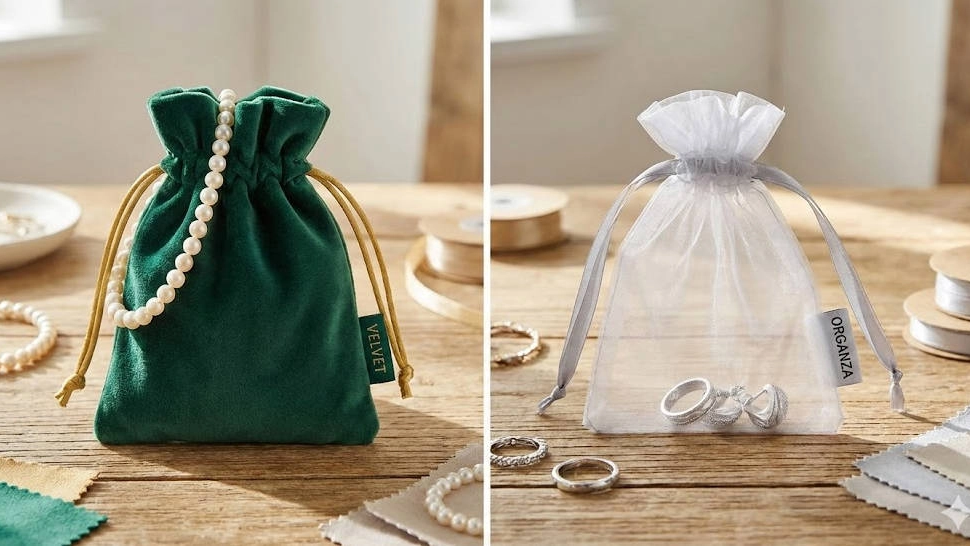
What Are Velvet Jewellery Bags?
Velvet jewellery bags, often called velvet pouches, are synonymous with luxury and safekeeping. Crafted from a soft, woven tufted fabric, velvet has a characteristically dense, short pile that gives it a plush and opulent feel. This material has been associated with royalty and high-end goods for centuries, and that perception carries over directly to its use in packaging. When a customer receives a piece of jewellery in a velvet bag, it immediately elevates the perceived value and quality of the item within.
The Allure of Luxury and Protection
The primary function and appeal of velvet lie in its exceptional protective qualities. The dense, soft pile creates a cushioned environment that is non-abrasive, safeguarding jewellery from scratches, scuffs, and impact. This is particularly vital for pieces with delicate surfaces, such as polished sterling silver, soft pearls, or fragile gemstones like opal. Furthermore, the opaque and thick nature of the fabric limits exposure to light and air, which can help slow down the tarnishing process for metals like silver and brass. The satisfying tactile experience of handling a velvet bag contributes significantly to the overall customer unboxing experience, making it feel special and memorable.
Pros and Cons of Velvet Bags
Pros:
Superior Protection: The soft, non-abrasive texture prevents scratches and provides cushioning.
Luxury Aesthetic: Instantly elevates the perceived value of the jewellery.
Opaque: Creates an element of surprise and is perfect for gifting valuable items.
Durable: Generally more robust and less prone to tearing than organza.
Tarnish Prevention: The thick fabric can help slow the oxidation process by limiting air exposure.
Cons:
Higher Cost: Velvet is a more expensive material to produce, making the bags pricier.
Attracts Dust and Lint: The pile can act as a magnet for dust and other fibres, requiring occasional cleaning.
Hides the Product: The opacity means customers cannot see the jewellery inside, which can be a drawback in a retail setting.
What Are Organza Jewellery Bags?
Organza jewellery bags are lightweight, sheer pouches made from a crisp, plain-weave fabric. Traditionally made from silk, modern organza is more commonly crafted from synthetic fibres like polyester or nylon, which makes it both durable and highly affordable. Its defining characteristic is its transparency, which is achieved through a meticulous twisting of the yarns before weaving. This creates a shimmering, ethereal appearance that is both delicate and elegant, making it a very popular choice for gift packaging and favours.
The Charm of Elegance and Visibility
The number one advantage of an organza bag is its visibility. The sheer fabric allows the jewellery inside to be seen clearly, catching the light and enticing potential buyers. This makes it an exceptional choice for retail environments like craft markets, boutiques, or online stores where the product's visual appeal is paramount. The wide array of available colours allows sellers to coordinate packaging with their brand or the jewellery itself. Despite their delicate appearance, these bags are relatively strong, and their lightweight nature means they add negligible weight or cost to shipping.
Pros and Cons of Organza Bags
Pros:
Excellent Visibility: Sheer material showcases the jewellery, making it ideal for display.
Highly Affordable: Significantly cheaper than velvet, allowing for bulk purchasing on a budget.
Wide Variety: Available in a vast spectrum of colours, sizes, and styles.
Lightweight: Adds almost no weight to the product, keeping shipping costs down.
Breathable: The open weave allows air to circulate, which can be beneficial for certain materials.
Cons:
Limited Protection: The thin, slightly rough texture offers minimal cushioning and can potentially snag on or scratch very delicate pieces with sharp prongs.
Less Durable: More prone to snagging, tearing, or fraying compared to velvet.
Less Luxurious Feel: Generally perceived as a more standard, budget-friendly option rather than a luxury one.
No Tarnish Protection: The breathable weave does nothing to prevent air exposure and tarnish.
Head-to-Head Comparison: Velvet vs. Organza
To help you make a clear decision, here is a direct comparison of the two materials across key attributes that matter most for jewellery packaging.
| Feature | Velvet Jewellery Bags | Organza Jewellery Bags |
|---|---|---|
| Protection Level | High. Soft, non-abrasive pile prevents scratches and provides cushioning. | Low. Thin fabric offers minimal protection from impact or scratches. |
| Aesthetics & Perception | Opulent, luxurious, high-end. Enhances perceived product value. | Elegant, delicate, decorative. Perceived as standard or budget-friendly. |
| Cost per Unit | Higher. A more premium investment in packaging. | Lower. Very cost-effective, especially for bulk orders. |
| Durability | High. Sturdy weave, resistant to tearing. | Low to Medium. Prone to snagging and tearing if not handled carefully. |
| Product Visibility | None (Opaque). Keeps the item hidden until opened. | Excellent (Sheer). Allows the product to be fully visible. |
| Best For | Fine jewellery, sterling silver, delicate gemstones, luxury clients, gifting. | Retail display, craft fairs, party favours, budget-friendly packaging, robust items. |
Which Bag Is Right for Your Needs? A Situational Guide
The ultimate question isn't "which bag is better?" but rather, "which bag is better *for my specific purpose*?". Let's break down the decision based on common scenarios.
When Should You Choose Velvet Bags?
Opt for velvet when your primary concern is protection and conveying a sense of premium quality. It is the undisputed champion in these areas.
For protecting precious metals and delicate gemstones: If you are packaging sterling silver, gold, platinum, or soft stones like pearls, opals, and amber, velvet is the superior choice. Its soft lining is essential for preventing the microscopic scratches that can dull a polished surface over time.
For creating a high-end, luxury brand experience: For jewellers and clients positioning themselves in the luxury market, the packaging is the first physical interaction a customer has with your product. A velvet bag communicates quality, care, and value before the jewellery is even revealed, significantly enhancing the customer's unboxing experience.
For valuable items where the "reveal" is key: The opacity of velvet is a feature, not a bug. For engagement rings, anniversary gifts, or any high-stakes presentation, the suspense and surprise created by the opaque pouch add to the moment's magic.
When Is Organza the Better Option?
Choose organza when visibility and cost-effectiveness are your top priorities. It excels at showcasing products in a visually appealing and affordable way.
For retail displays and craft markets: If you sell at a physical location where customers browse, organza is invaluable. Shoppers can see the colour, sparkle, and design of your pieces without having to open every bag, leading to more engagement and sales. The wide colour selection also allows for beautiful, eye-catching displays.
For budget-friendly packaging, giveaways, or party favors: When you need to package a large number of items, such as for a wedding, corporate event, or as a free gift with purchase, the low cost of organza bags makes them the most practical and economical choice. They still provide an elegant touch without breaking the bank.
For items that won't easily scratch: If you are packaging more robust items like beaded bracelets, resin pendants, or enamel pins, the lower protective quality of organza is less of a concern. In these cases, its visual benefits and low cost far outweigh its drawbacks.
Beyond the Basics: Important Considerations
Beyond the main points of protection and cost, a few other factors can influence your choice.
A Note on Tarnish and Material Interaction
While velvet bags can help *slow down* tarnishing by limiting airflow, they don't stop it completely. For long-term storage of silver, it's always best to include an anti-tarnish strip inside the bag. Organza bags, due to their breathable nature, offer no protection against tarnish. If you choose organza for silver jewellery, be sure to inform your customers about proper care and storage.
Branding and Customization Opportunities
Both types of bags offer opportunities for branding. Many suppliers offer custom printing services, allowing you to add your logo directly onto the bag. Alternatively, a more cost-effective and versatile option is to attach a branded hang-tag or a custom card to the drawstring of either bag. This maintains a professional look and reinforces your brand identity regardless of the material you choose.
The Final Verdict: Making an Informed Choice
There is no universal winner in the debate between velvet and organza jewellery bags. The right choice is a strategic one, dictated by your product, your brand, your customer, and your budget.
To summarize:
Choose Velvet for Protection, Luxury, and Perceived Value. It's the investment you make when the safety of the item and the prestige of your brand are paramount.
Choose Organza for Visibility, Affordability, and Decorative Appeal. It's the practical choice for retail showcasing, bulk packaging, and when the budget is a primary driver.
By carefully evaluating your specific needs against the distinct advantages of each material, you can confidently select the perfect packaging that not only protects your jewellery but also enhances its value and tells your brand's story.


